
Hope in the midst of hopelessness
/
Pastoral assistant Lincon Hardouin shares the message with us this Sunday in March.
Read MorePastoral assistant Lincon Hardouin shares the message with us this Sunday in March.
Read MoreLay Preacher Gordon Hay shares the message with us this Sunday in December 2022.
Read MoreLay Preacher Gordon Hay shares the message with us this Sunday in November 2022.
Read MoreRobert Botha shares the message with us this Communion Sunday in November 2022.
Read MoreReverend Wayne van Heerden shares the message with us this first Sunday in October, followed by communion.
Read MorePastoral assistant Lincon Hardouin shares the message with us this Sunday in May 2021.
Read MorePreacher: Gordon Hay
Verses: Psalm 51:1-13 and Romans 7:7-20
Preacher: Lincon Hardouin
Verses: Romans 14:1-12
Preacher: Gordon Hay
Verses: John 4:1-26 and Romans 12:1-2
Preacher: Lincon Hardouin
Verses: Jeremiah 1:4-10 and Romans 8:26-39
Preacher: Lincon Hardouin
Verses: Romans 8:1-11
Preacher: Gordon Hay
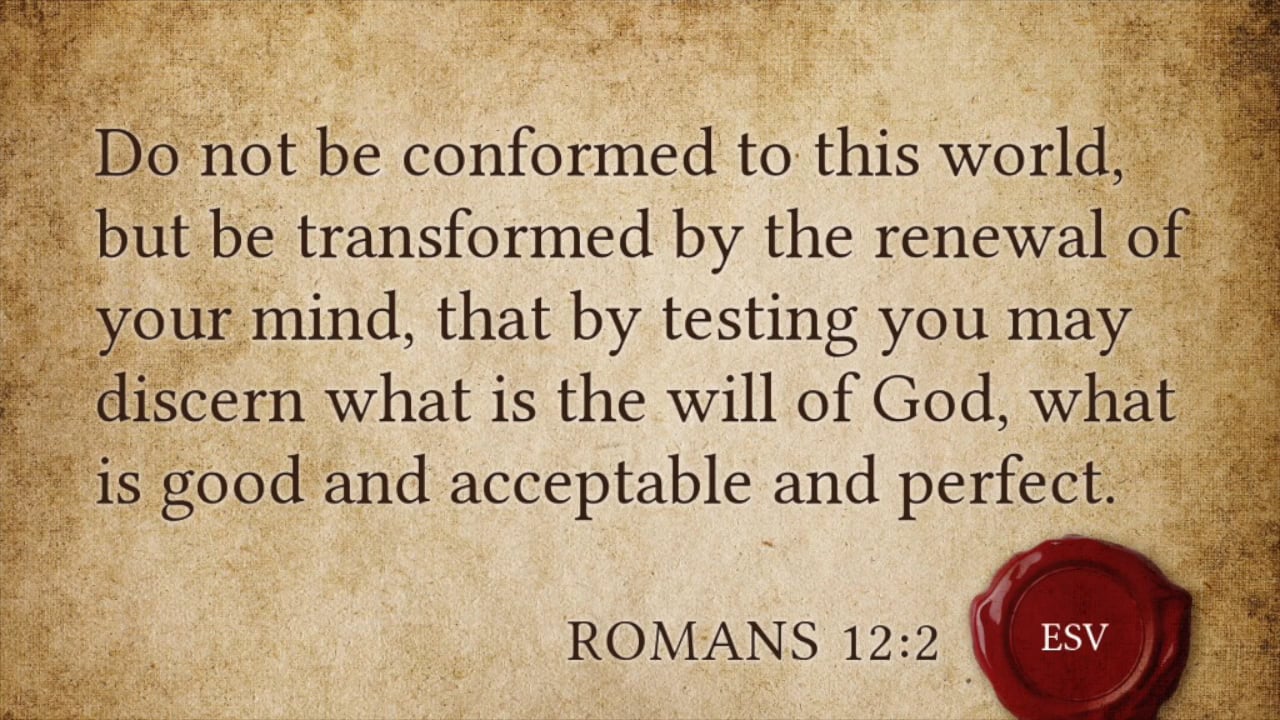
Verses: Isaiah 6:1-8 and Romans 12:1-2
When growing up I had the idea that my life in church, and my life outside of church, were two different worlds.
Going to church with my parents, I realised quickly that it was a time to be neatly dressed and to be on one’s best behaviour. It was a time when people seemed rather serious. It was clearly very special, but different to the everyday life that we lived on the other days of the week. I understood this to some extent. On Sundays we were in church to worship our mighty God. This required proper behaviour. There was after all, plenty of time to relax during the other six days of the week.
Looking back, I perhaps had the idea that it was only on Sundays that we worshiped God, prayed, sang hymns and practised our faith life.
It seemed to be okay to relax during the week and to play around, and do things with my friends that might not be appropriate for Sunday.
Preacher: Alan Cameron
Verses: 1 Kings 8:56-61, Romans 11:33-36

Faith alone, grace alone, Christ alone and Scripture alone are an apt description of Reformation teaching and belief, which reach a climax and summation in God’s glory alone, Soli Deo Gloria.
The glory of God defies simple explanation. Glory describes the essential nature of God. At best we can seek to use human language by way of analogy to grasp its meaning. Old Testament Hebrew speaks of God’s glory as ‘weight’ or ‘heaviness’ in an attempt to describe God’s visible and active presence by way of creation and covenant. In creation the heavens declare the glory of God. In covenant relation with his people a burning bush, a pillar of cloud and fire and the ‘shekinah glory’ filling the tabernacle and temple are material manifestations of God’s glory. When Moses requested to see God’s glory in Exodus 33 he was granted a rear view of comet-like afterburn flashing past him. In short, the glory of God in the O.T. defies adequate description....
Preacher: Alan Cameron
Verses: 2 Peter 1:16-21, Luke 24:25-32
Martin Luther regarded the right understanding of Scripture as the essence of the Reformation. Even though many of the outward characteristics 500 years ago are different today, the basic principles remain the same. The first thing Luther did after being excommunicated from the Roman Catholic church in 1521 was to translate the New Testament into German in just eleven months. As such, the Reformation had radical ramifications. Up until this time the vast majority of the population was illiterate. With the advent printing and the rapid distribution of literature, the Bible became much more accessible to the needs of people’s lives...
Preacher: Alan Cameron
Verses: John 1:1-13, Romans 1:16,17
Note: There is no audio for this sermon as our sound desk was in for repairs at the time.
Martin Luther was convinced that faith is the key that opens the human heart to the heart of God. Faith is the key which enables us to understand the great Reformation truth ‘Justification By Faith’ or more precisely ‘Justification by Grace through Faith’. Luther was convinced that we would only understand faith in the light of the character of God and the reality of a battle for the hearts and minds of humanity.
Luther, slowly and painfully, saw that the righteousness of God in Romans 1:17 does not simply refer to his justice requiring judgement, rather a new status granted by grace. In Luther’s world there was a division between spiritual people like monks and nuns and secular people in the market place and everyday world. If you really wanted to be spiritual you took the monk’s cowl or the nun’s habit and devoted yourself to God in a monastery. However, Luther’s ‘monkery’ did not satisfy his soul. As part of the Augustinian order Luther was encouraged by his spiritual director to read the works of Augustine to address some of his doubts and an over sensitive conscience. Augustine spoke of a ‘restless heart’ that would only find rest in God....
Preacher: Gordon Hay
Verses: Colossians 1:15-22, Philippians 3:10-14
It was 500 years ago that Martin Luther nailed his 95 theses to the door of the church in Wittenberg launching what became known as the Reformation. If you were here last week you would have heard that we are looking at what have become known as the five “solas” of the reformation. These are:
Alan commenced last Sunday by looking at “Grace alone”. And he said this:
Grace is “not simply a theological concept to discuss and debate, grace is the means whereby we start, continue and finish our faith journey on earth and beyond.”
As we look at “By Christ alone” this morning I want to continue with the picture of our faith journey and how we are to respond to the five solas. And I want to look at this:
Preacher: Alan Cameron
Verses: Ephesians 2:1-10, Titus 2:11-14
John Newton in his hymn reminds us that grace is truly ‘amazing’. Yet all too often grace has become such a familiar term that we lose the amazing nature of that wonderful truth. So, with Gods help, let us attempt to put ‘amazing’ back into grace. Grace is not simply a theological concept. It is not just an idea about God. Grace is all about the person and work of Jesus. Grace is Jesus personified. Throughout the Old Testament grace and sacrifice go hand in glove. A blood sacrifice of an animal was the substitute for the sins of the Israelites. In themselves they were not sufficient for the full forgiveness of sins, needing to be repeated time and again; thereby pointing to the coming of Christ...
Preacher: Alan Cameron
Verses:Romans 8:31-39

Prior to chapter eight, Paul mentions the Holy Spirit only four times. However, now he more than makes up for the absence. He speaks of the Spirit no less than twenty times in chapter eight. His concern is not so much who the Spirit is i.e. his person, rather what the Spirit does. And what the Spirit does is to impart the life and hope of God that have been the key themes since chapter five...
Preacher: Alan Cameron
Verses:Romans 8:1-17

Roman chapter eight has rightly been described as one of the greatest passages of Scripture, dealing with three foundational truths of the gospel viz. Assurance, Life in the Spirit and Adoption in Christ.
The birth right of the Christian is ‘no condemnation’. The verdict of the final day has been brought forward and declared i.e. ‘righteous’ for those belonging to Christ. The verdict cannot be changed. We face judgement day with complete assurance. What lies ahead for the believer is not a life-or-death assessment of our lives, but the divine disclosure of acquittal...
Preacher: Alan Cameron
Verses: Romans 7:14-25
‘Who am I?’ They mock me, those lonely questions of mine. Whoever I am, Thou knowest, O God, I am Thine’. The answer to Dietrich Bonhoeffer’s poignant probing is crucial as it will determine our values, lifestyle, future and ultimate destiny. It is here that Romans 7 enters the fray. Few passages of Scripture have been more influential in shaping how Christians think about themselves. However, the passage is not so much about the Christian life as about the law, the Torah and its effects upon the believer...
Trinity is challenged to be a congregation pointing people to God.
This vision encompasses all people no matter their age or background; it encompasses all we are doing and will be doing in the future, it is on-going and will never be completed.
Sunday Morning: 10:00 - 11:15
459 Lover's Walk, Lynnwood, 0081
Click here to find out about Bible study and fellowship groups
Administrator
Mandy James
T: 076 369 5295 (9:00 - 13:00)
admin@trinity.org.za
Minister
Rev Graham Fryer
T: 061 355 9500
graham.fryer@gmail.com
Church Banking Details:
Trinity Presbyterian Church Lynnwood
First National Bank
Cheque Account No: 546 0000 9037
Branch Code: 252045
Charisma Banking Details:
Charisma Community Service Drop In Centre
Cheque Account No: 621 419 88206
Branch Code: 252045